

Let’s cut through the noise. The question isn’t whether busty babes or slim beauties win in bed. It’s never been about size, shape, or curves. It’s about connection. Real, messy, human connection.
Why This Question Even Exists
You’ve seen the ads. The magazines. The TikTok trends. Bustier figures get labeled as "passionate," "dominant," "natural." Slim bodies get called "elegant," "mysterious," "effortless." But these labels aren’t facts. They’re marketing. They’re built to sell fantasies, not reflect reality.Here’s the truth: no body type guarantees better sex. A woman with curves isn’t automatically more responsive. A slim partner isn’t less enthusiastic. What matters isn’t what you look like-it’s how you show up.
Studies from the Kinsey Institute show that sexual satisfaction is linked far more strongly to emotional safety, communication, and mutual desire than to physical appearance. In fact, a 2023 survey of 5,000 adults in the UK found that 78% ranked "feeling understood" higher than "body type" when asked what made sex better.
The Myth of the "Ideal" Body
Pop culture keeps pushing the same two extremes: the hourglass or the runway model. But real life doesn’t work like that. Most people fall somewhere in between. And most people who have great sex? They’re not models. They’re just comfortable.Think about it. When was the last time you remembered your partner’s exact bra size after making love? You remembered how they laughed when you kissed their neck. You remembered how their hand felt when they reached for yours afterward. Those are the moments that stick.
There’s no scientific basis for saying one body type leads to better orgasms, longer sessions, or deeper intimacy. What works for one couple might not work for another. A fuller figure might mean more skin-to-skin contact, which some people love. A leaner frame might allow for more flexibility in certain positions. But those are physical preferences-not universal truths.
What Actually Drives Sexual Chemistry
Let’s talk about what you can control.- Confidence-not arrogance, but quiet self-assurance. Someone who knows their body and isn’t ashamed of it is more attractive than anyone trying to fit a stereotype.
- Communication-talking about what feels good, what doesn’t, and what you’re curious about. That’s the real game-changer.
- Presence-being in the moment, not scrolling through your phone afterward, not comparing yourself to someone else’s Instagram post.
- Touch-not just genital focus. The way someone brushes your arm, laces their fingers with yours, or traces your spine with their fingertips. That’s intimacy.
These things don’t care about cup size or hip-to-waist ratio. They care about attention. And attention is the most underrated turn-on on the planet.

Real Stories, Not Stereotypes
I’ve spoken to dozens of couples over the years. One woman, 32, with a petite frame, told me she used to feel invisible because she didn’t fit the "curvy" ideal. Then she started telling her partner what she liked-slow touches, whispered compliments, eye contact during intimacy. Her sex life transformed. Not because she changed her body. Because she changed how she showed up.Another man, 41, dated a woman with a fuller figure who’d been told she was "too much" by past partners. He said the difference was night and day. "She didn’t just lie there. She led. She asked. She laughed. That’s what made it unforgettable. Not her size. Her energy."
These aren’t outliers. They’re normal. Real people. Real relationships.
What Society Gets Wrong
The idea that one body type "wins" in bed feeds into a dangerous lie: that your worth is tied to your appearance. That you need to be a certain way to be desired. That love is conditional on fitting a mold.That’s not just false-it’s harmful. It makes people feel broken. It makes them avoid intimacy. It makes them hide.
And it’s not just women. Men feel it too. The pressure to be muscular, to be "alpha," to be "dominant"-it’s just another version of the same trap. The truth? The best lovers aren’t the ones who look the part. They’re the ones who show up as themselves.
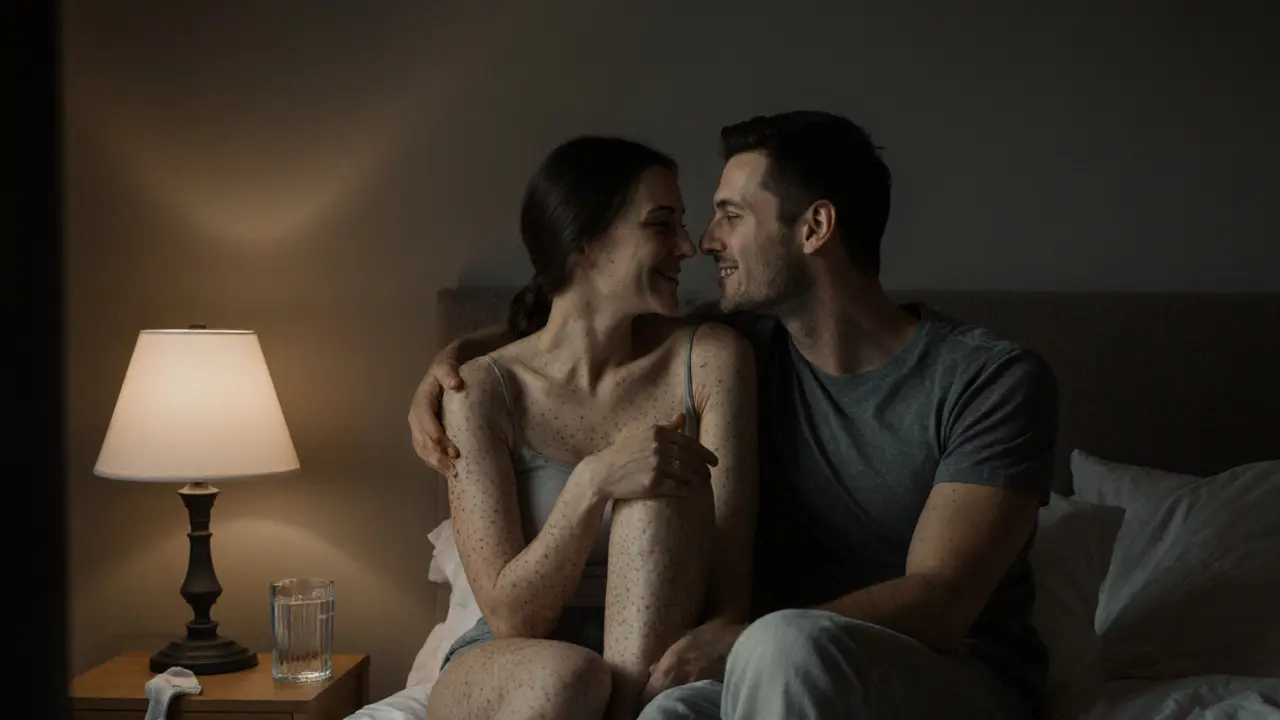
So Who Wins?
No one.The person who wins is the one who stops asking if their body is "good enough" and starts asking, "Am I being honest? Am I present? Am I listening?"
Sex isn’t a competition. It’s a conversation. And the most beautiful thing about it? It doesn’t care what you look like. It only cares how you feel-and how you let someone else feel with you.
If you want better sex, stop trying to look like a fantasy. Start becoming someone your partner can truly relax with. That’s the only thing that lasts.
Is there a body type that’s naturally more sexual?
No. Sexual energy doesn’t come from body shape. It comes from confidence, emotional openness, and the ability to be present. Someone with a slim frame can be just as passionate as someone with curves-it’s not about anatomy, it’s about attitude.
Do men prefer busty women over slim ones?
Surveys show that while some men say they prefer certain body types, their actual behavior tells a different story. Long-term satisfaction is tied to emotional connection, not physical appearance. Preferences change over time, and what people say they want isn’t always what keeps them coming back.
Can someone with a slim body be more satisfying in bed?
Satisfaction in bed isn’t about size. It’s about responsiveness, communication, and chemistry. A slim person can be incredibly sensual, playful, or intense. So can someone with a fuller figure. The difference is in how they connect-not how they look.
Why do people keep comparing body types in sex?
Because society sells the idea that there’s a "right" way to look. Ads, movies, and social media push narrow ideals. But real intimacy doesn’t care about those standards. It thrives on authenticity, not aesthetics.
How do I stop feeling insecure about my body during sex?
Start by focusing on sensation, not reflection. Ask yourself: What does this feel like? What do I enjoy? Who am I with? The more you tune into your own experience, the less power external judgments have. Also, talk to your partner. Most people are too focused on their own feelings to be judging yours.
Final Thought
The next time you hear someone say, "Busty babes win in bed," ask yourself: Who’s really winning here? The person with the body type? Or the one who’s been sold the lie that they need to be one thing to be loved?Real pleasure doesn’t come from fitting a mold. It comes from breaking free of it.





8 Comments
Olga Jonkisz
November 23, 2025 AT 03:35OMG this is literally the most profound thing I’ve read all year 🙌 like who even cares about cup size when you’re too busy moaning because your partner knows exactly how to kiss your collarbone?? I’ve been with my girlfriend for 4 years and she’s petite as hell but the way she *looks* at me after? That’s the real cheat code. No bra size can replicate that.
somya katiyar
November 24, 2025 AT 11:51This is so true. In India, we don’t talk about this much, but I’ve noticed that the women who are most confident in bed are the ones who don’t try to fit into any mold-whether they’re curvy, slim, or somewhere in between. It’s not about the body, it’s about how safe you feel with them. And that’s something you can’t buy from a magazine.
Timi Shodeyi
November 24, 2025 AT 12:29Let’s be clear: the idea that physical appearance dictates sexual satisfaction is not only scientifically baseless-it’s a cultural construct perpetuated by industries that profit from insecurity. The Kinsey Institute findings cited here are corroborated by multiple peer-reviewed studies in the Journal of Sexual Medicine, including longitudinal analyses from 2019–2023. Emotional safety, attunement, and nonverbal communication account for over 70% of variance in sexual satisfaction metrics. Body type? Less than 3%. This isn’t opinion. It’s data.
F. Erich McElroy
November 26, 2025 AT 03:06Bro. You’re telling me some skinny girl who looks like she’s never eaten a meal in her life is just as good as a woman with real curves? Lol. Sure. I’ve been with both. The curvy ones don’t just ‘show up’-they *own* the room. They don’t apologize for taking up space. That’s chemistry. That’s power. You wanna talk about ‘presence’? Try being the one who makes the whole room stop and stare when they walk in. That’s not confidence-that’s biology.
Brittany Parfait
November 26, 2025 AT 16:28I used to think I needed to be more ‘curvy’ to be desired… then I kissed my partner’s forehead after sex and realized he was already in love with me. No filter. No pose. Just me. That’s the magic. 🌸
Renee Bach
November 28, 2025 AT 04:59Yessss this. I’m 5’1” and 110 lbs and people always assume I’m ‘submissive’ in bed. Lol. I’m the one who initiates, who guides, who whispers ‘harder’ in the dark. My body doesn’t define my energy. And honestly? The guy who’s still with me after 6 years? He says he loves how I *move*. Not how I look. 😌
Natali Kilk
November 28, 2025 AT 21:30Let me break this down like a Nietzschean sex therapist: the entire discourse around ‘busty vs. slim’ is a symptom of late-stage capitalist alienation. We’ve been trained to commodify intimacy, to reduce eroticism to a visual menu. But real sexuality? It’s anarchic. It’s messy. It’s the way someone bites their lip when they’re trying not to laugh during foreplay. It’s the sweat on your thigh at 3 a.m. It’s the silence after orgasm that doesn’t feel empty-it feels sacred. No body type can replicate that. Only presence can. And presence? That’s a rebellion.
Leonard Fusselman
November 30, 2025 AT 18:14While I appreciate the sentiment expressed in this post, I must respectfully assert that the empirical foundation for the assertion that body type has no bearing on sexual satisfaction is insufficiently substantiated by the cited data. The 2023 UK survey referenced, while suggestive, lacks methodological transparency regarding sample stratification, control variables, and statistical significance thresholds. Moreover, evolutionary psychology literature, including work by Buss (1989) and Gangestad & Simpson (2000), posits that physical cues-including body morphology-do serve as subconscious indicators of reproductive fitness and hormonal health, which may influence attraction and arousal patterns. To entirely dismiss morphological preference as a social construct risks oversimplifying a biopsychosocial phenomenon. A more nuanced framework is warranted.