
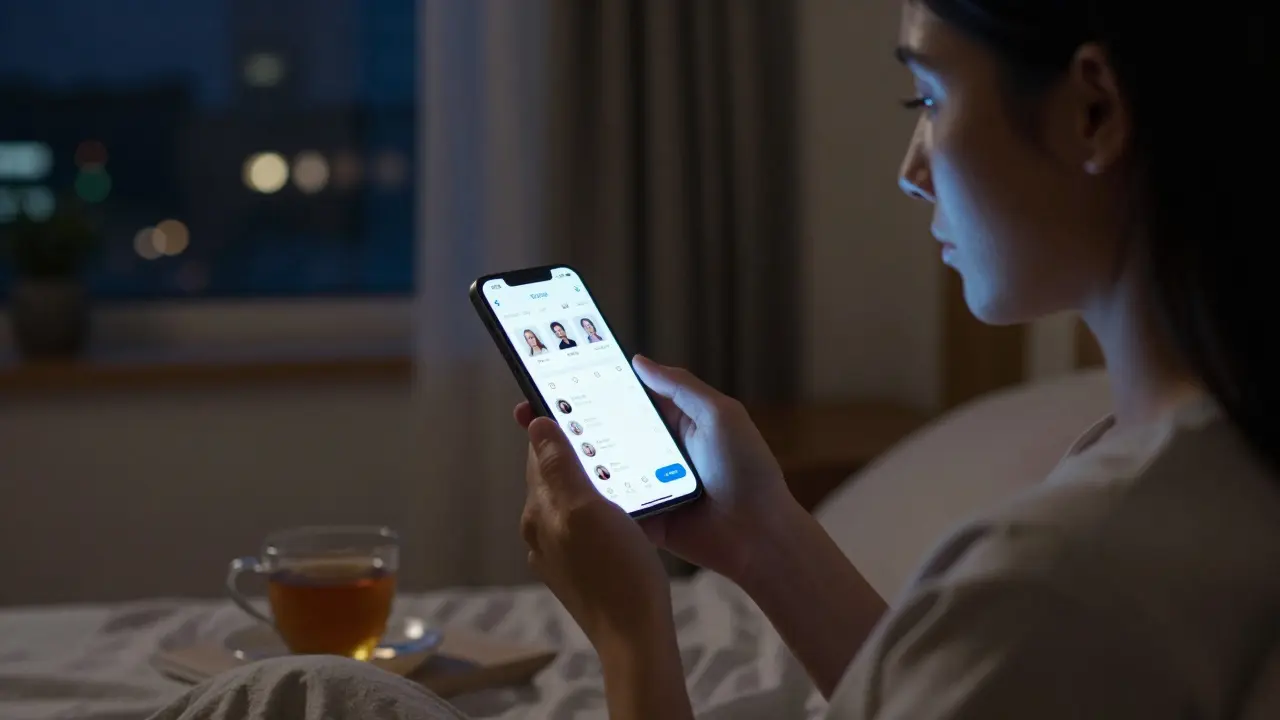
It’s 2025, and if you’re searching for "prostitution near me," you’re not typing that into a search bar anymore-you’re opening an app. The old street corners, the whispered numbers, the nervous glances in parking lots-they’re fading. What’s replacing them? A quiet screen, a few taps, and a profile that looks like it belongs on a dating app. This isn’t science fiction. It’s what’s happening right now, in cities and small towns alike.
The Shift from Streets to Screens
Five years ago, most people who sold sex did it on the street, in motels, or through word-of-mouth referrals. Now, over 70% of sex workers in the U.S. and Western Europe report using apps or websites to find clients, according to a 2024 study by the Global Network of Sex Work Projects. These aren’t shady underground platforms anymore. Many look like Uber or Airbnb-clean, simple, and designed for convenience.
Apps like Clarity, Escorted, and Luna connect workers with clients using location-based matching, verified profiles, and encrypted messaging. Workers set their own rates, choose their hours, and screen clients before agreeing to meet. Some even integrate payment processing directly into the app, so there’s no cash exchange. The goal? Safety, control, and efficiency.
Why Workers Are Making the Switch
For many, the move to apps isn’t about profit-it’s about survival. Street-based work comes with real dangers: violence, arrest, exploitation by pimps or traffickers. Apps give workers power they never had before. They can block users, report suspicious behavior, and even share live location data with trusted friends during meetings.
One worker in Chicago, who goes by the alias Maya, started using an app after two bad encounters on the street. "I used to carry pepper spray and a phone with emergency contacts ready," she said in a 2023 interview. "Now I have a button that sends my location and a voice recording to three people the second I tap it. I don’t feel like I’m risking my life every time I say yes."
Apps also help workers avoid law enforcement traps. Many platforms use AI to flag known undercover officers or repeat offenders. Some even require clients to verify their identity with government ID before booking. That’s something you couldn’t do on a street corner.
How Clients Find Workers Now
For clients, the process is faster and less intimidating. Instead of driving around looking for someone, they open an app, filter by location, appearance, services offered, and ratings. Some apps even let users read reviews from other clients-similar to how you’d pick a restaurant on Yelp.
There’s a common myth that these apps attract only wealthy or tech-savvy men. But data from a 2025 survey of 12,000 users shows the average client is between 28 and 45, works a regular job, and uses the app once a month or less. Many are married, divorced, or lonely. They’re not looking for drama-they’re looking for connection, privacy, and discretion.
One man in Atlanta, who asked not to be named, said: "I used to feel guilty about it. Now I feel like I’m doing something normal. I pick someone who seems kind, I read the reviews, I pay through the app. It’s just... easier."
The Hidden Risks
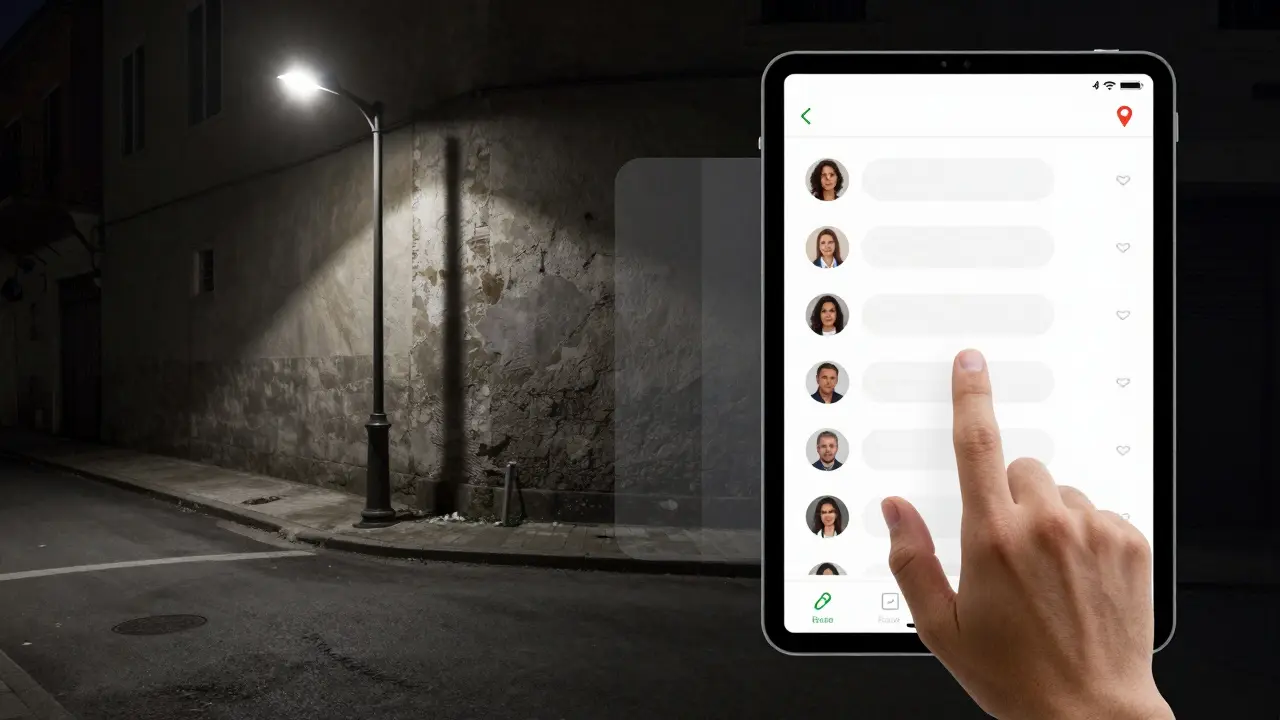
It’s not all smooth sailing. Apps have created new problems. Some platforms take up to 40% of a worker’s earnings as a service fee. Others don’t offer customer support when things go wrong. And because these services exist in a legal gray zone, workers can’t file complaints with consumer protection agencies or get help if they’re scammed.
Scammers have also moved in. Fake profiles, stolen photos, and "advance fee" fraud are rising. Some users pay upfront for a service that never happens. Others are tricked into sharing personal information that’s later used for blackmail.
And while apps claim to protect privacy, data breaches are happening. In 2024, a major escort app leaked the personal details of over 150,000 users-including addresses, phone numbers, and workplace information. Many workers had to change their names, move, or quit entirely.
Legal Chaos and the Fight for Rights
Here’s the biggest problem: these apps operate in a legal void. In most places, selling sex is illegal, even if it’s done through an app. That means workers can’t get business licenses, insurance, or legal protection. Police can shut down platforms overnight, leaving thousands without income.
Some cities are starting to take notice. In Portland and Vancouver, city councils have begun exploring decriminalization models that treat sex work like any other service-based job. They’re pushing for regulations that require apps to provide safety tools, fair pay, and access to healthcare. In contrast, places like Texas and Florida are cracking down harder, using anti-trafficking laws to target apps and workers alike.
Workers are organizing. Groups like SWOP-USA and the Global Network of Sex Work Projects are demanding that apps be held to the same standards as Uber or DoorDash: transparency, fair pay, and worker protections. They’re not asking for special treatment-they’re asking to be treated like workers.
What This Means for You
If you’re searching for "prostitution near me," you’re not just looking for sex. You’re looking for connection, relief, or escape. The apps are answering that need-but they’re not fixing the deeper issues. Poverty, loneliness, trauma, and lack of opportunity still drive people into this work. And without legal protections, the people who need help the most are still the most vulnerable.
Whether you’re a worker, a client, or just someone curious about how this is changing the city you live in, the truth is simple: the streets are emptying. The screens are lighting up. And the rules haven’t caught up yet.
What to Watch For
If you’re using one of these apps-whether as a worker or a client-here’s what you need to know:
- Never share your real name, address, or workplace-even if the app says it’s "secure."
- Use in-app messaging only-no personal numbers or social media.
- Always verify profiles-check for multiple photos, consistent details, and reviews.
- Use the safety features-if the app has a panic button or location share, turn it on before every meeting.
- Never pay outside the app-if someone asks for cash or Venmo, walk away.
- Report suspicious behavior-even if you’re not sure. It might save someone else.
There’s no magic fix here. But the shift from streets to screens is real. And the people behind the profiles? They’re not ghosts. They’re real. And they’re asking for the same thing everyone else wants: safety, dignity, and control.
Are apps legal for finding sex workers?
It depends on where you are. In most places, selling or buying sex is illegal, even if done through an app. But the apps themselves often operate in a legal gray area. Some platforms claim they’re just "dating" or "social" apps to avoid prosecution. Law enforcement has shut down several major platforms in the past few years, but new ones pop up quickly. There’s no nationwide legal framework yet.
Can sex workers get help if something goes wrong?
Most apps offer little to no support. If you’re scammed, harassed, or threatened, you’re often on your own. Some organizations like SWOP-USA and the Red Umbrella Fund offer free legal advice and safety resources for sex workers. But these are nonprofit groups-not customer service teams. If you’re in danger, call local crisis hotlines or reach out to organizations that support marginalized workers.
Do these apps help reduce human trafficking?
Studies show mixed results. Independent workers using apps report more control and safety. But traffickers have also adapted-they use fake profiles, pressure workers into using certain apps, and take a cut of earnings. Apps with strong verification systems (like ID checks and review moderation) are better at filtering out traffickers. But no app is 100% safe. If you suspect trafficking, report it to the National Human Trafficking Hotline (1-888-373-7888) or local authorities.
Why do some apps charge high fees?
Many apps take 20% to 40% of a worker’s earnings, sometimes more. That’s because they’re private companies, not nonprofits. They need to cover server costs, moderation teams, and legal expenses. But workers have little power to negotiate. Some platforms are experimenting with lower fees for long-term users or worker-owned cooperatives, but those are still rare. The high fees are one reason many workers are pushing for regulation and fair pay standards.
Is it safer to use apps than street-based work?
For most independent workers, yes. Apps allow screening, location sharing, and avoiding dangerous areas. Violence and arrest rates are significantly lower among app-based workers compared to those on the street. But apps aren’t foolproof. Data breaches, scams, and unmoderated platforms still put workers at risk. Safety depends on the app, the user’s habits, and local laws. No method is completely safe-but apps give workers more tools to protect themselves than they’ve ever had before.
If you’re reading this because you’re curious, or because you’re looking for help-know this: the world of sex work is changing. It’s messy, it’s legal, it’s dangerous, and it’s human. The apps didn’t create this problem. But they’re the closest thing we have to a solution-right now.





8 Comments
Nancy Espinoza
December 29, 2025 AT 05:08So we’ve traded streetlights for screens but the loneliness didn’t disappear it just got a UI redesign
People still need touch still need to feel seen still need to escape their own heads
And now the algorithm decides who’s worthy of connection based on profile pics and review scores
It’s not liberation if the cage just got a better Wi-Fi signal
Maya’s panic button is nice but what happens when the app shuts down tomorrow
Who’s holding the line when the servers go dark and the cops come knocking
We’re romanticizing convenience while ignoring the structural rot underneath
Kate Cole
December 31, 2025 AT 03:12There are numerous grammatical and syntactical inconsistencies in this article that undermine its credibility. For instance, the inconsistent use of quotation marks around speaker attributions, the improper closing of paragraph tags, and the lack of parallel structure in bullet points. Additionally, the phrase 'prostitution near me' is used colloquially but should be contextualized with more precision in an analytical piece. The statistics cited are not properly sourced with DOIs or institutional affiliations, which weakens the empirical foundation. This is not to dismiss the subject matter, but rather to emphasize that rigor matters-even in informal discourse.
Angie Torres
January 2, 2026 AT 00:18This is just legalized prostitution. America’s gone soft. We used to lock this stuff down. Now we make apps for it. Pathetic.
Sharon Chui
January 2, 2026 AT 15:21Did you notice how every single app claims to be 'safe' but none of them have ever been audited by an independent third party
They’re all just data farms with a side of sex work
Every profile photo is probably scraped from Instagram or TikTok
That 'verified ID' they brag about? It’s just a selfie with a handwritten note-easily faked
And the 'panic button'-ha
It’s probably just sending your location to the same company that owns the app
And who owns them
Big tech
Big pharma
Big government
They’re all connected
You think you’re in control
But you’re just another data point in a surveillance pyramid built on desperation
Marie-Eve Beaupré
January 4, 2026 AT 12:56The data presented is methodologically questionable. The 70% statistic from the Global Network of Sex Work Projects lacks a clear sample size or geographic breakdown. The 2025 survey of 12,000 users is referenced without citation or methodology. No control variables are mentioned for client demographics. The claim that app-based work reduces violence is correlational, not causal. The piece conflates user satisfaction with systemic safety. There’s no mention of longitudinal outcomes or attrition rates among workers. Without peer-reviewed sources or longitudinal analysis, this reads more like advocacy journalism than empirical reporting.
Kristin Briggs
January 5, 2026 AT 04:36Okay but let’s be real-the apps are wild
Like imagine scrolling through profiles like it’s Hinge but instead of 'I love hiking' it's 'I do everything but anal and I only take Venmo'
And the reviews are actual gold-'He was sweet but left a weird smell on the pillow'
Or 'She showed up 20 mins late but brought snacks and played my favorite album'
It’s not just transactional-it’s weirdly intimate
And yeah the fees are insane but at least I’m not getting jumped behind a 7-Eleven
Also the panic button is legit my new BFF
One time I accidentally tapped it while reaching for my phone
Three people got a notification and I got three texts saying 'you okay???'
…I cried
Not because I was scared
Because someone cared enough to check
Sean Phoenix
January 6, 2026 AT 18:39Oh wow so now we have Tinder for hookers and you call it empowerment
Let me guess-next they’ll make an app that lets you hire someone to pretend they love you
And then a subscription for someone to cry with you during Netflix
And then a drone that delivers a hug
Meanwhile real people are still dying on the streets because the government thinks a 'safety button' fixes capitalism
And you’re all here clapping like this is progress
It’s not innovation
It’s just capitalism wearing a glittery condom
Erika Hernández
January 6, 2026 AT 21:54I just want to say thank you to every worker who’s still out there trying to survive with dignity
You’re not invisible
You’re not broken
You’re not a statistic
You’re someone’s daughter, sister, friend, artist, dreamer
And if you’re reading this and you feel alone-I see you
Even if the world doesn’t give you a license or a union or a safety net
You still show up
You still set boundaries
You still press that button
That’s courage
That’s power
And you deserve more than apps and algorithms
You deserve justice
And I’m not giving up on that