
Every day, over 40 million people globally are involved in sex work, according to the International Labour Organization. Yet this number doesn’t tell the full story. The real question isn’t about the numbers-it’s about how we, as a society, should respond. Is prostitution a crime to be punished, a choice to be protected, or something else entirely? This article breaks down the moral dilemma at the heart of this issue.
Prostitution is the exchange of sexual services for money or goods. It’s not just a legal issue-it’s a deep moral puzzle. On one side, advocates argue it’s a personal choice deserving of autonomy. On the other, critics see it as exploitation that perpetuates inequality. The truth? It’s rarely black and white.
Why This Is a Moral Dilemma
Prostitution forces us to confront conflicting values. Should society prioritize individual freedom or collective safety? Can we separate the act from the context? For example, a woman selling sex to support her children faces different moral questions than someone forced into the trade. This complexity is why there’s no single answer.
Consider the case of Maria, a sex worker in Amsterdam. She chose this path after losing her job in healthcare. "I have control over my schedule and clients," she says. "I pay taxes and get health insurance. This isn’t exploitation-it’s work." But then there’s James, a survivor of trafficking in the Philippines. "I was sold at 14," he explains. "No one asked if I wanted this. It’s slavery." Both stories are real. Both are valid. That’s the dilemma.
Ethical Perspectives: What Do Philosophers Say?
Philosophers have debated this for centuries. Let’s look at two major views. Utilitarianism focuses on outcomes. If prostitution reduces harm or increases overall happiness (like through regulated sex work), it might be acceptable. But if it causes more harm (like trafficking), it’s not.
Deontology takes a different approach. From this view, certain actions are inherently right or wrong, regardless of consequences. For example, some argue that selling sex violates human dignity, making it unethical no matter the outcome.
Take a real-world example. In New Zealand, decriminalization led to better health outcomes. Utilitarians would say this proves the policy works. Deontologists might still object, arguing the act itself is wrong. These frameworks clash because they ask different questions: "What’s the result?" vs. "Is it inherently right?"
Legal Approaches Around the World
How countries handle prostitution varies wildly. Here’s what you need to know:
- Decriminalization: Removing all criminal penalties for sex work. New Zealand did this in 2003, leading to better health access and reduced police harassment.
- Legalization: Regulating sex work like a business. In Germany, it’s legal but requires licenses and health checks. However, critics say this creates a "regulated slavery" system.
- Nordic Model: Criminalizing buyers but not sellers. Sweden adopted this in 1999. While it reduced street prostitution, studies show indoor sex work became more dangerous due to secrecy.
- Criminalization: Punishing both buyers and sellers. This is common in the US outside Nevada. It often pushes sex work underground, increasing risks like violence and HIV transmission.
Each system has trade-offs. For instance, Germany’s legalization model saw a 20% drop in sex trafficking reports by 2020, but also a rise in brothel exploitation. New Zealand’s decriminalization reduced violence by 33%, according to a 2018 study in the Journal of Sex Research. These numbers show context matters.

Human Trafficking: Fact vs. Fiction
Many assume prostitution and trafficking are the same. They’re not. While trafficking involves coercion and exploitation, not all sex work is forced. A 2021 UN report found that only 15% of sex workers globally were trafficked. However, criminalization makes it harder to identify trafficking victims. When sex work is illegal, workers avoid police even when they’re being exploited.
Take the case of the Netherlands. Legalization allows authorities to monitor brothels, making it easier to spot trafficking. In contrast, in the U.S., where most states criminalize sex work, trafficking cases often go unreported because victims fear arrest. A 2019 study by the Polaris Project showed that in criminalized regions, 68% of trafficking victims never reported to law enforcement.
Health and Safety Realities
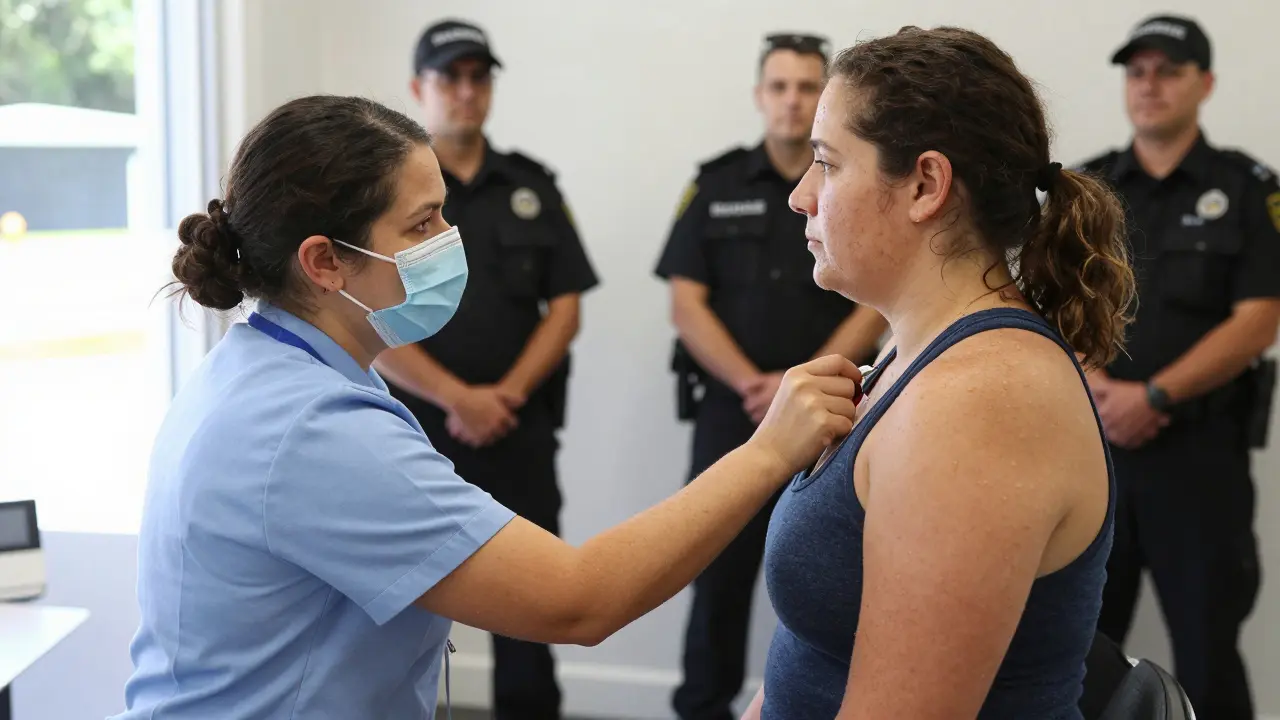
Legal frameworks directly impact health outcomes. In New Zealand, decriminalization led to a 40% drop in HIV rates among sex workers between 2003 and 2015. Why? Because they could access healthcare without fear. Similarly, a 2020 study in the Journal of Public Health found that in countries with decriminalization, sex workers were 33% less likely to experience violence.
But in places where it’s criminalized, things get dangerous. In the U.S., a 2018 survey of 350 sex workers showed that 70% had been physically assaulted. Without legal protections, they can’t report crimes safely. This isn’t hypothetical-it’s data. For example, in Missouri, where prostitution is illegal, 52% of sex workers reported police refusing to help after assaults.
Real Stories: Voices from the Field
Let’s hear from those directly affected. Maria, a former sex worker in California, says: "When I was working underground, I had no way to protect myself. If a client was violent, I couldn’t call the police. Now that I’ve left the industry, I support decriminalization because it saves lives." In contrast, James, a former client in Sweden, says: "The Nordic Model works. I’ve seen street prostitution disappear in my neighborhood. But I also know some sex workers feel trapped because they can’t access services."
Then there’s Aisha, a sex worker in Thailand. "I was forced into this at 16," she explains. "My trafficker threatened my family. If the law protected us, I’d have escaped sooner." These stories show why blanket policies fail. What works for one person harms another.
Where Do We Go From Here?
There’s no universal solution. But evidence points to one thing: criminalization harms sex workers more than it helps. Decriminalization, with strong health and safety regulations, reduces violence and improves well-being. The moral dilemma isn’t about whether prostitution is right or wrong-it’s about whether we want to protect vulnerable people or punish them further.
Consider the example of New Zealand. Since decriminalization, sex workers have reported higher job satisfaction, better health access, and fewer assaults. Meanwhile, in the U.S., states that criminalize sex work see higher rates of HIV and violence. This isn’t coincidence-it’s cause and effect.
Is prostitution always exploitative?
No, not always. While many cases involve coercion, some sex workers choose this profession voluntarily. For example, in New Zealand, where prostitution is decriminalized, surveys show that 70% of sex workers report feeling in control of their work conditions. However, exploitation remains a significant issue in regions where it’s criminalized.
What is the Nordic Model?
The Nordic Model criminalizes buying sex but not selling it. First implemented in Sweden in 1999, it aims to reduce demand by targeting clients. While street prostitution decreased, studies show indoor sex work became more dangerous due to increased secrecy. A 2018 study in Sexual Health found that sex workers in Nordic Model countries were 30% more likely to experience violence.
Does decriminalization increase human trafficking?
No. Research from the United Nations and academic journals shows decriminalization reduces trafficking. In New Zealand, trafficking cases dropped by 25% after decriminalization. Why? Because sex workers can report crimes without fear, making it harder for traffickers to operate. Criminalization, conversely, drives trafficking underground.
Why do some countries criminalize prostitution?
Many governments believe criminalization protects morality or public safety. For example, the U.S. argues it prevents exploitation. But evidence suggests otherwise. A 2022 study in Global Public Health found that criminalized regions had higher rates of violence and HIV. The real reason often stems from cultural or religious beliefs, not data.
What role does stigma play?
Stigma worsens all harms. When society shames sex workers, they avoid healthcare, police, and support networks. In Nevada, where prostitution is legal in certain counties, workers report 50% less stigma than in criminalized states. This directly improves safety. Reducing stigma isn’t about endorsing prostitution-it’s about protecting human rights.