

Twenty years ago, a sex worker might have relied on street corners, phone lines, or classified ads to find clients. Today, they use apps, websites, and social media to build businesses, set their own hours, and control who they work with. The shift isn’t just about technology-it’s about power. More sex workers are taking control of their safety, income, and boundaries than ever before. But this new landscape comes with its own risks, rules, and realities.
How Digital Platforms Replaced the Streets
Before the internet, sex work was often hidden, dangerous, and isolated. Workers had little control over who approached them, where they met, or when they were paid. Many were forced to work late at night, in unfamiliar neighborhoods, with no way to screen clients ahead of time.
Now, platforms like OnlyFans, ManyVids, FanCentro, and even TikTok and Instagram let sex workers create profiles, set prices, and communicate directly with clients. Some earn thousands a month selling photos, videos, live streams, or custom content. Others use dating apps like Feeld or Tinder to connect with clients who are upfront about what they’re looking for.
A 2024 survey by the Global Network of Sex Work Projects found that 78% of sex workers in the UK now use at least one digital platform as their primary source of income. That’s up from 32% in 2015. The shift isn’t just about convenience-it’s survival. Digital tools let workers avoid dangerous situations, negotiate terms before meeting, and build a client base without relying on pimps or brothels.
Types of Digital Sex Work Today
Digital sex work isn’t one thing. It’s a range of jobs, each with different risks, rewards, and requirements.
- Content creation - Selling photos, videos, or exclusive posts on platforms like OnlyFans. Workers set their own prices and post on their own schedule. Some earn $500 a month. Others make over $50,000.
- Live streaming - Real-time interactions on platforms like Chaturbate or Stripchat. Workers interact with viewers who tip in virtual currency. This requires energy, consistency, and the ability to read an audience.
- Online companionship - Text-based or video chat services where clients pay for conversation, roleplay, or emotional support. Sites like RentAFriend or Fiverr host these services. It’s less sexual, but still falls under the broader definition of sex work.
- Escort services booked online - Many still offer in-person meetings, but now they use platforms like AdultWork or MyRedbook to screen clients, share reviews, and manage appointments. Some never meet clients in person at all.
- Camming for brands - Some workers are hired by companies to promote products, run affiliate campaigns, or appear in ads. These gigs pay well but come with strict rules and often require NDAs.
What these jobs have in common is autonomy. Workers decide what they’re comfortable doing, how much to charge, and when to stop. That’s something most traditional jobs don’t offer.
The Hidden Costs of Digital Sex Work
It’s easy to see the money and think it’s all smooth sailing. But behind the screens, there are real costs.
First, there’s the emotional toll. Constantly performing, managing client expectations, and dealing with rejection can be exhausting. Many workers report burnout after six to twelve months of full-time work.
Second, platform rules change without warning. OnlyFans banned explicit content from some creators in 2023 over payment processor pressure. ManyVids started requiring ID verification for all users in 2024, delaying payouts for weeks. Some workers lost access to their accounts overnight with no appeal process.
Third, financial instability is real. Payment processors like Stripe and PayPal routinely freeze accounts linked to adult content. Workers often use cryptocurrency, prepaid cards, or third-party services like CashApp to get paid. But those come with fees, limits, and risks.
And then there’s stigma. Even in 2025, many sex workers can’t tell their families, landlords, or doctors. A single leak on social media can ruin relationships, housing, or job prospects outside of sex work.
How Workers Protect Themselves Online
Smart sex workers don’t just post content-they build systems to stay safe.
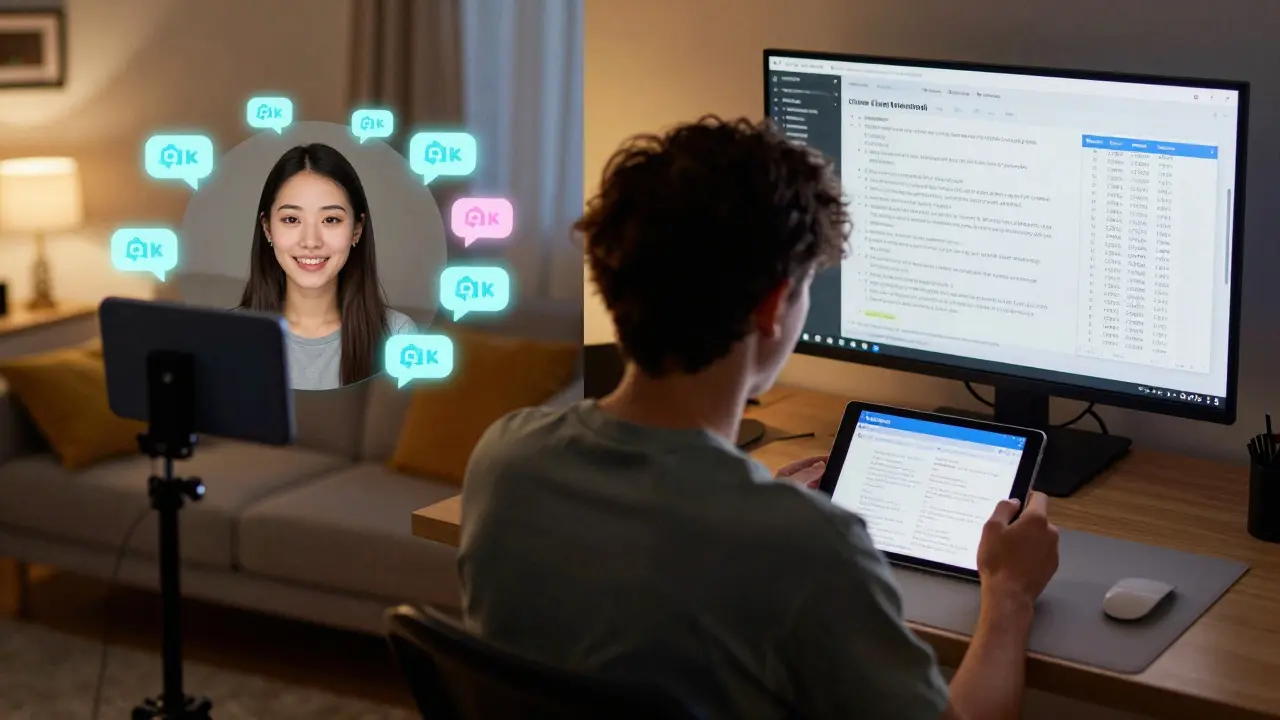
- Using pseudonyms - No real names, no photos of faces, no identifiable backgrounds. Many use AI-generated avatars or stylized photos to stay anonymous.
- Screening clients - Asking for proof of identity, checking social media profiles, requiring payment upfront, and avoiding requests that feel off.
- Setting boundaries - Clear rules on what’s allowed, what’s not, and what happens if rules are broken. Many post these rules publicly on their profiles.
- Using encrypted messaging - Signal, Telegram, and Wickr are common. WhatsApp is avoided because it’s tied to phone numbers and can be traced.
- Keeping financial records - Tracking income, expenses, and taxes. Some hire accountants who specialize in adult industry clients.
There are also online communities-private Discord servers, Reddit groups, and forums-where workers share tips, warn each other about dangerous clients, and offer emotional support. These spaces are often the only places where sex workers feel truly understood.
Legal Gray Zones and Platform Bans
Legally, sex work exists in a mess. In the UK, selling sex isn’t illegal. But many related activities are: soliciting in public, running a brothel, or advertising sex services. That means even digital workers have to be careful.
Platforms like Instagram and Facebook ban adult content outright. Workers use coded language-"private sessions," "exclusive content," "companion services"-to avoid detection. Some use VPNs to bypass geo-blocks. Others post content on multiple platforms to spread the risk.
In 2023, the UK government passed the Online Safety Act, which requires platforms to remove "illegal content." But the law doesn’t clearly define what counts as illegal when it comes to consensual adult content. That leaves platforms guessing-and often over-censoring. Many workers report being banned for posts that were never illegal, just "suggestive."
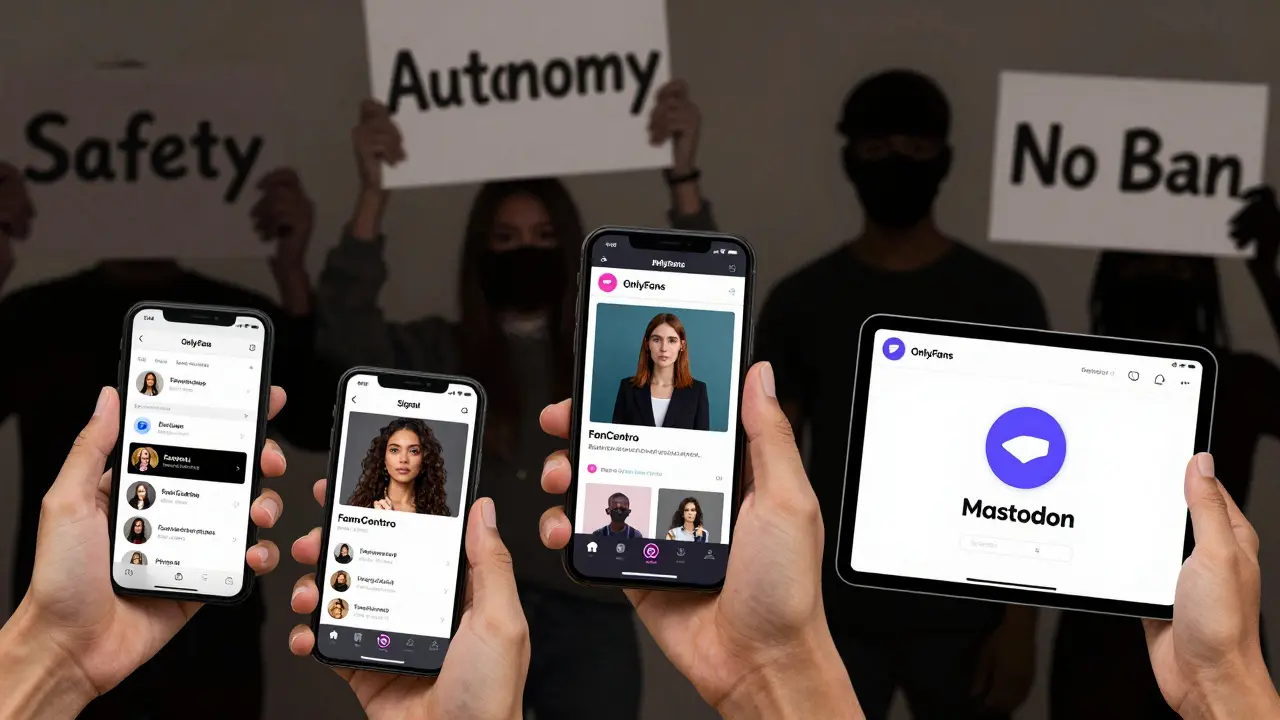
Some have turned to decentralized platforms like Mastodon or Lens, where moderation is community-driven. But these are smaller, less reliable, and harder to monetize.
What’s Next for Digital Sex Work?
The future isn’t just about more apps or better tech. It’s about rights.
More sex workers are organizing. Groups like the English Collective of Prostitutes and the UK Sex Workers’ Advocacy Network are pushing for legal recognition, better platform policies, and access to banking and housing. In 2024, a coalition of 12 UK-based adult content creators launched a fund to help workers fight wrongful account bans.
Technology will keep changing. AI-generated content is already being used to mimic real performers. Some platforms are testing "verified creator" badges to separate real people from bots. Others are experimenting with blockchain-based payments to avoid bank interference.
But the biggest shift won’t be technical-it’ll be cultural. As more people understand that sex work is work, stigma will slowly fade. And with less shame, workers will have better access to healthcare, legal support, and safety nets.
For now, digital sex work is a high-risk, high-reward job. It’s not for everyone. But for those who choose it, it’s often the only path to financial independence, creative freedom, and personal control.
Real Stories, Real Choices
Sarah, 31, from Bristol, started posting on OnlyFans after losing her job in retail. She makes £3,200 a month. She works from home, wears a mask on camera, and never meets clients. "I don’t feel ashamed. I’m running a business," she says.
Jamal, 27, from Manchester, does live camming and text chats. He uses a pseudonym and a voice modulator. "I’ve had clients try to track me down. I’ve had my bank account frozen twice. But I’ve never been safer than now. I control everything."
These aren’t outliers. They’re the new normal.
Is digital sex work legal in the UK?
Yes, selling sexual services online is legal in the UK. But advertising those services, sharing explicit content on certain platforms, or working with others (like a manager or agent) can cross legal lines. The law is unclear, and enforcement is inconsistent. Many workers operate in a gray area, using coded language and private platforms to stay under the radar.
Can sex workers open bank accounts?
It’s difficult. Most major banks in the UK-Barclays, HSBC, Lloyds-will freeze or close accounts linked to adult content. Many workers use cryptocurrency wallets, prepaid debit cards, or services like Wise and Revolut, which are more tolerant. Some hire accountants who specialize in adult industry clients to help manage finances legally.
How do sex workers stay safe online?
They use pseudonyms, avoid sharing personal details, screen clients with ID checks or social media reviews, use encrypted apps like Signal, and never meet strangers without a safety plan. Many also join private online communities where they share warnings about dangerous clients and platform changes.
Do platforms like OnlyFans pay taxes?
OnlyFans doesn’t pay taxes for creators. Workers are classified as self-employed and must declare their income to HMRC. They can deduct business expenses like cameras, lighting, internet, and software. Many hire accountants to handle filings, especially since income can be irregular and payments come from multiple sources.
What’s the difference between sex work and pornography?
Sex work is any exchange of sexual services for money or goods. That includes live shows, text chats, companionship, and in-person meetings. Pornography is recorded content meant for public consumption. Many sex workers do both, but they’re not the same. One is transactional and personal; the other is produced for mass media.
Can you do digital sex work while keeping your real identity private?
Yes, and most successful workers do. They use stage names, avoid showing faces or tattoos, never mention real locations, and use separate devices or burner phones. Some use AI tools to generate fake backgrounds or voices. Privacy isn’t optional-it’s essential.
If you’re considering digital sex work, know this: it’s not glamorous. It’s hard, lonely, and unpredictable. But for many, it’s also the most honest, empowering, and financially stable job they’ve ever had. The digital era didn’t create sex work-it just gave it a new voice. And that voice is louder than ever.





10 Comments
Mariam Mosallam
December 3, 2025 AT 02:11So let me get this straight-you’re telling me selling nudes online is now a "career path"? Cool. Next you’ll say Uber drivers are entrepreneurs and TikTok dancers are artists. At least the streets had a code. Now it’s just capitalism with extra steps and worse Wi-Fi.
Dan Garcia
December 4, 2025 AT 18:37It’s incredible how much agency digital platforms have given people who were once pushed to the margins. I’ve spoken with dozens of sex workers over the years-many of them were homeless, abused, or trapped before they found a way to work on their own terms. Yes, the platforms are risky, yes, the banks are hostile-but the fact that someone can now earn $50k/month from their bedroom while wearing a mask? That’s not just survival. That’s liberation. Keep going, you’re doing better than most corporate drones.
Derren Spernol
December 5, 2025 AT 03:27You know, I used to think this whole digital sex work thing was just a fad, like those crypto bros who thought NFTs were going to replace real estate-but then I started noticing how many people I know-friends, acquaintances, even my cousin’s roommate-are doing it, quietly, successfully, without drama. No pimps. No street corners. No johns showing up drunk at 3 a.m. Just a laptop, a good light, and a boundary list longer than their grocery list. It’s weird, honestly. The world’s changing so fast that the people who were once the most stigmatized are now the ones running the most autonomous businesses. And nobody’s talking about it except in whispers. Which, honestly, is kind of the point.
Sharon Bryant
December 5, 2025 AT 07:23"Sex work is work." Say it louder. I didn’t hear you. Also, "companion services"? That’s just a euphemism for "I’m getting paid to pretend I like you."
Triston Hargrave
December 6, 2025 AT 23:45It’s not about legality. It’s about morality. You can’t outsource your dignity to a subscription model. 😔 Platforms don’t care about you-they care about ad revenue. And when they ban you? You’re just another ghost in the algorithm. This isn’t empowerment-it’s exploitation dressed up as entrepreneurship.
Jodie Rae Plaut
December 7, 2025 AT 13:06For anyone considering this path: treat it like a startup. Document everything. Use a separate email. Set up a business LLC if you can. Track expenses like lighting, software, internet, even your coffee machine-you can deduct it. Use a crypto wallet like Coinbase or Kraken, not PayPal. And join r/SexWorkSupport on Reddit-real people, real advice. You’re not alone. And yes, you’re allowed to take breaks. Burnout is real. You’re not a machine.
Colin Napier
December 8, 2025 AT 21:22The notion that digital platforms have "empowered" sex workers is a dangerous myth. The UK’s Online Safety Act has led to mass deplatforming, and payment processors still freeze accounts with zero recourse. You think you’re in control? You’re just trading one form of exploitation for another-now with terms of service you didn’t read and no legal recourse. The idea that "I set my own hours" ignores the fact that you’re working 14-hour days to keep up with algorithmic demands. This isn’t autonomy-it’s precarity with a filter.
Patsy Ferreira
December 10, 2025 AT 16:54"Selling nudes is empowerment"? LOL. You people need to stop romanticizing this. You’re not a business owner-you’re a content farm. And don’t even get me started on "AI avatars"-that’s just digital prostitution with a robot face. Also, "I use Signal"-you think that makes you safe? You’re still on a platform that can delete your life in one click. Wake up.
William Terry
December 11, 2025 AT 12:12I get it. You’re trying to make a living. But why not just get a real job? Like, I don’t know, a job that doesn’t require you to perform intimacy for strangers? I mean, come on. You’re trading your dignity for a PayPal link. And don’t tell me it’s "just business"-you know it’s not. People don’t pay for your personality-they pay to feel something. And that’s not sustainable. You’re gonna burn out. And when you do, who’s gonna be there for you?
Peter Jones
December 12, 2025 AT 08:37It’s worth noting that the structural conditions enabling digital sex work-deindustrialization, wage stagnation, lack of social safety nets-are the same ones that have pushed millions into gig economy roles. The difference here is visibility. Most gig workers aren’t labeled as "sex workers," but the precarity is identical. The real issue isn’t the nature of the labor-it’s the lack of legal protections for all forms of precarious labor. Until we address that, calling this "empowerment" is just semantics. The autonomy is real, but it’s fragile. And that’s the tragedy.