
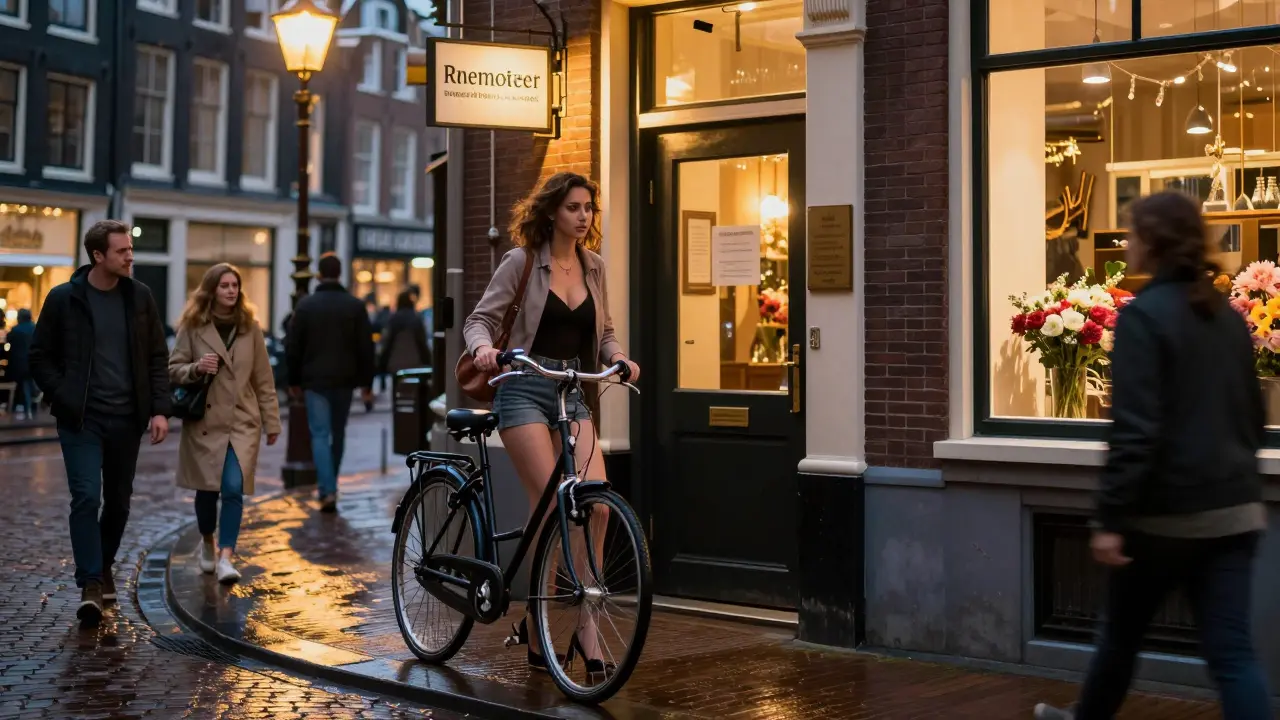
Sex work isn’t one thing. It doesn’t look the same in Bangkok as it does in Amsterdam, in Marrakech as it does in Berlin. The people doing it aren’t all the same, and the societies around them don’t treat them the same way. Yet too often, the world talks about sex work as if it’s a single problem - something to be banned, rescued, or shamed. The truth is far more complex. In some places, it’s a legal, regulated job. In others, it’s a dangerous underground trade. In a few, it’s woven into ancient rituals. What happens to sex workers depends less on what they do and more on where they live.
Legalization and Regulation: The Netherlands and Germany
In the Netherlands, sex work has been legal since 2000. Brothels operate openly in Amsterdam’s De Wallen district, and workers can register as self-employed, pay taxes, and access healthcare. They’re not criminals. They’re small business owners. Many choose this work because it pays better than other service jobs, and they have more control over their hours and clients. The system isn’t perfect - exploitation still happens, especially among migrants - but the legal framework gives workers tools to report abuse.
Germany took a similar path in 2002 with the Prostitution Act. Sex work became a recognized profession. Workers can sign labor contracts, join unions, and get social security. A 2021 study by the German Federal Institute for Population Research found that legal status improved access to medical care by 40% and reduced violence reported by workers by nearly a third. Still, stigma lingers. Many workers avoid registering because they fear family backlash or discrimination in other parts of life.
Decriminalization: New Zealand’s Model
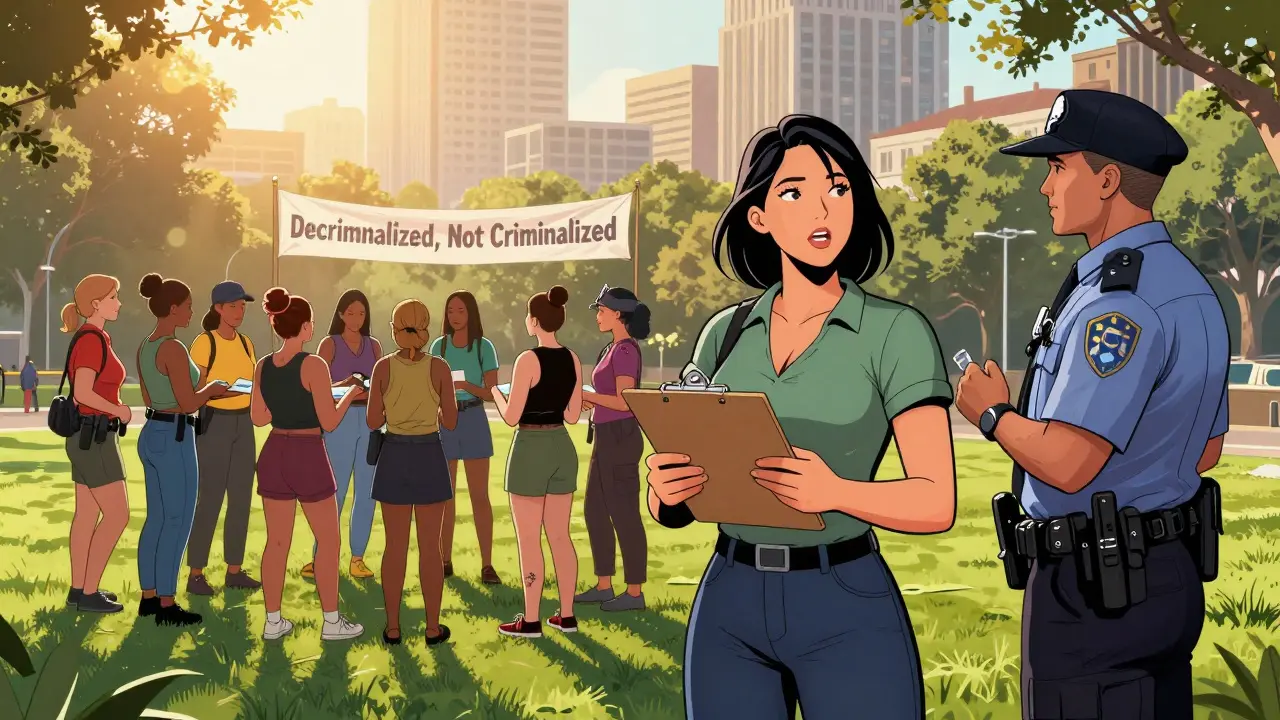
New Zealand’s approach is different. Instead of legalizing and regulating sex work, they decriminalized it in 2003 with the Prostitution Reform Act. That means selling sex isn’t a crime, and neither are related activities like brothel-keeping or advertising. Workers aren’t forced to register or jump through bureaucratic hoops. The law treats sex work like any other job - with basic labor protections.
Research from the University of Otago shows this model works. After decriminalization, street-based workers reported feeling safer. Police no longer harassed them. Clients were more likely to use condoms because workers could negotiate without fear of arrest. Violence dropped by 45% over five years. The biggest change? Workers started speaking up. They formed collectives, demanded better conditions, and even helped shape new policies. When the law doesn’t criminalize you, you’re more likely to trust the system.
Strict Prohibition: The United States and Russia
In most of the United States, sex work is illegal everywhere except a few rural counties in Nevada. Even there, it’s tightly controlled - only licensed brothels are allowed, and workers must undergo regular health checks. Outside Nevada, being a sex worker means living under constant threat. Police raids, arrests, and fines are common. Many workers are undocumented immigrants or survivors of trafficking, making them even more vulnerable.
Police don’t target clients as often as they target workers. That imbalance pushes the trade deeper underground. Workers can’t screen clients safely. They can’t call for help if something goes wrong. A 2023 survey by the Global Network of Sex Work Projects found that 68% of U.S.-based sex workers had been assaulted in the past year, and only 12% reported it to police - most feared being arrested instead of protected.
Russia takes it further. Sex work isn’t just illegal - it’s framed as a moral failing. Laws target not just workers but also anyone who “promotes” prostitution, including landlords who rent to sex workers or friends who help them find clients. In 2020, a law was passed allowing authorities to seize property from people suspected of being involved in sex work, even without a conviction. Activists say this has pushed hundreds of workers into rural areas, where they’re isolated and even more at risk.
Religious and Cultural Acceptance: Parts of India and Morocco
In some cultures, sex work isn’t hidden - it’s part of tradition. In India, the Devadasi system dates back over a thousand years. Originally, young girls were dedicated to temple deities and performed ritual dances. Over time, the practice became corrupted, and many Devadasis ended up in sexual servitude. The Indian government outlawed the practice in 1988, but in remote areas of Karnataka and Andhra Pradesh, it still lingers. Women in these communities often don’t see themselves as sex workers - they see themselves as serving the divine. Their status is complex: socially marginalized, yet culturally rooted.
In Morocco, particularly in cities like Tangier and Marrakech, sex work exists in a gray zone. It’s technically illegal, but tolerated in certain districts. Many workers are women from rural areas who moved to the city for work and found this path more reliable than low-wage jobs. Tourists often seek them out, and local authorities turn a blind eye - as long as it stays quiet. Some women even own small guesthouses where they offer services, blending sex work with hospitality. They don’t call themselves sex workers. They call themselves houtiyyat - women who host guests.
Survival and Migration: Southeast Asia and Latin America
In Thailand, Cambodia, and the Philippines, poverty and lack of education push many women into sex work. But here, it’s not just about money - it’s about survival. A 2024 report by the International Labour Organization found that 70% of sex workers in these countries send money back to families in rural villages. They’re often the primary breadwinners. Some work in bars or massage parlors. Others are trafficked across borders.
What makes this different from places like the Netherlands is the lack of legal protection. Workers can’t unionize. They can’t demand safer conditions. If a client refuses to use a condom, they can’t call the police without risking arrest. Many rely on peer networks for safety - sharing client lists, warning each other about violence, pooling money for legal aid.
In Brazil, the situation is similar. In Rio’s favelas, sex work is one of the few income options for women with no formal education. Some work on the streets. Others use apps to connect with clients. The government doesn’t offer support, but grassroots groups like Redes da Maré have created safe spaces where workers can get HIV tests, legal advice, and childcare. These groups are often the only thing standing between workers and exploitation.

Why the Differences Matter
The way a society treats sex workers tells you more about its values than it does about sex work itself. Countries that treat it as a crime see workers as problems to be removed. Countries that treat it as work see workers as people with rights. The difference isn’t just legal - it’s human.
When sex work is criminalized, people die. When it’s decriminalized, people live. When workers are stigmatized, they hide. When they’re respected, they speak up. The data doesn’t lie. Legal frameworks shape outcomes. Health, safety, dignity - these aren’t abstract ideals. They’re measurable results.
There’s no single solution that works everywhere. What works in New Zealand might fail in Nigeria. What’s tolerated in Morocco might be punished in Saudi Arabia. But one thing is clear: ignoring the reality of sex work doesn’t make it disappear. It just makes it more dangerous.
What’s Missing from the Conversation
Most global discussions about sex work focus on trafficking or morality. Rarely do they ask: What do sex workers themselves want? In 2023, the Global Network of Sex Work Projects surveyed over 10,000 workers across 78 countries. The top three demands? Legal protection, access to healthcare, and the right to organize.
Not abolition. Not rescue. Not shame. Just safety and dignity.
The voices of sex workers are rarely heard in policy rooms. When they are, it’s often through NGOs speaking on their behalf. But workers know their own needs best. In Thailand, sex workers led the push for condom distribution programs. In South Africa, they designed their own outreach training for HIV prevention. In Canada, they helped rewrite police training manuals to reduce harassment.
Real change doesn’t come from outsiders deciding what’s best. It comes from listening to those on the ground.





5 Comments
Ryan Woods
December 12, 2025 AT 17:00Legalizing sex work is a slippery slope. You think you're protecting people but you're just normalizing exploitation. The Netherlands? They've got brothels on every corner now. Kids see this as a career path. Where's the moral compass? This isn't a job like any other. It degrades women. It degrades society. And don't give me that 'worker rights' nonsense - you don't get to sell your body and call it entrepreneurship.
Teresa Bulhoes
December 13, 2025 AT 17:10Wow. Just… wow. I read this whole thing with my heart in my throat. The Devadasi women in India - they’re not ‘victims’ in the way we think. They’re keepers of a sacred thread, even if it got twisted by greed. And the houtiyyat in Morocco? They’re not hiding. They’re weaving survival into culture, with dignity stitched into every thread. This isn’t about legality. It’s about whether we see people - or just problems to fix.
Leonie Holly
December 15, 2025 AT 02:32When the law treats you like a criminal you can't ask for help. Simple as that. The data shows decriminalization saves lives. Not because it makes sex work glamorous - but because it removes the fear. People don't need saving. They need space. And safety. And the right to say no without getting arrested. Why is that so hard to understand?
Marcia Chrisyolita
December 16, 2025 AT 06:29The so-called ‘New Zealand model’ is a catastrophic failure masked as progressive policy. You decriminalize and suddenly you’re flooded with transnational trafficking rings. The UNODC reported a 200% spike in forced labor cases in regions following similar frameworks. This isn’t liberation - it’s institutionalized predation. And the ‘worker collectives’? They’re fronts for organized crime. The data you cite is cherry-picked. The real data? It’s buried under NGO propaganda. Wake up. This isn’t labor rights. It’s human commodification dressed in rainbow flags.
Chrissy Brown
December 17, 2025 AT 19:32THIS. RIGHT HERE. 🙌
People aren’t broken because they do sex work. The system is broken because it punishes them for surviving.
Let them unionize. Let them get healthcare. Let them walk down the street without fear.
It’s not radical. It’s basic humanity. 💛